Memory Thread
A photo-based memory preservation web application that helps caregivers and family members
record and organize memories for people experiencing memory loss, elderly individuals.
AI
Interaction Design
Personal
2025
Live Service
Try it Now
Context
Self Initiated Project
Timeline
2025.12
(2 Weeks)
Responsibilities
Full-stack development, UX design, AI prompt engineering
Tools
Figma, Github, Vercel
Outcome Overview
Background
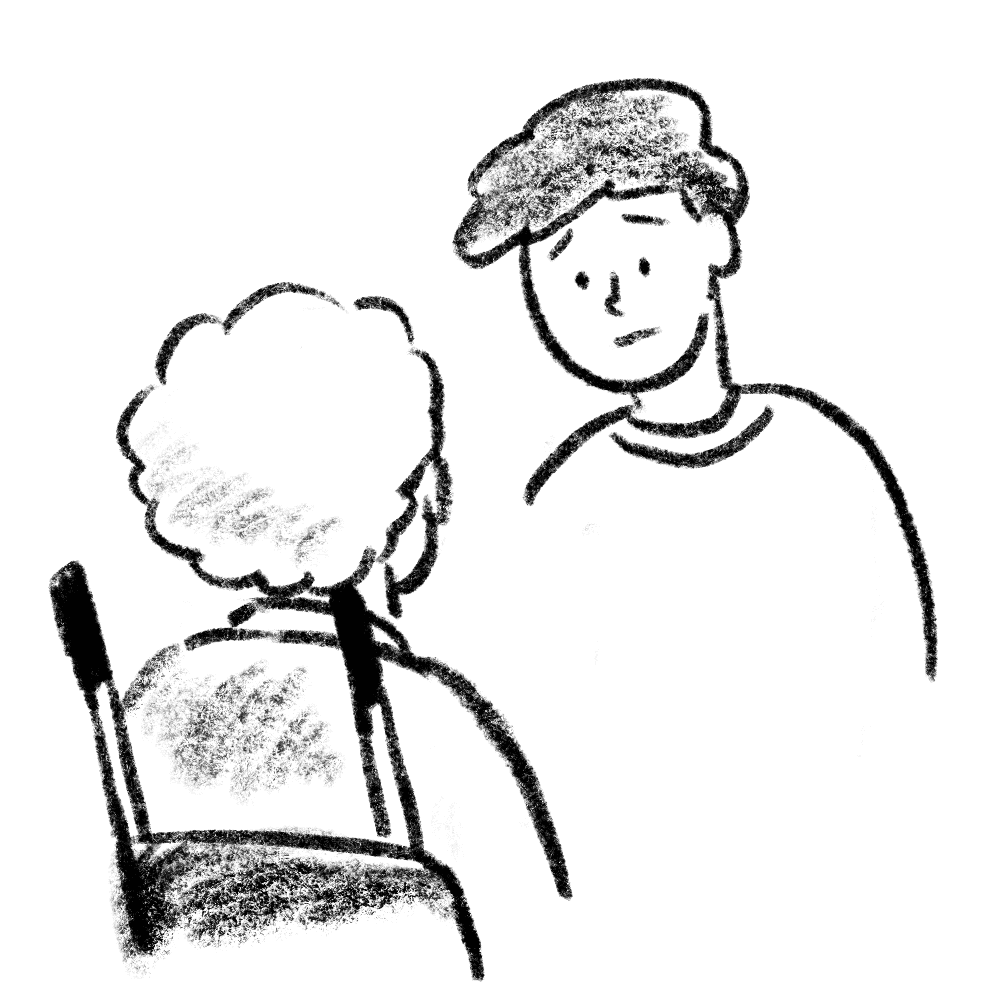
This project began from two parallel encounters with memory preservation challenges.
In Korean tutoring sessions,
I worked with a second-generation Korean American whose mother was experiencing cognitive decline and decreasing confidence in English.
The student wanted to record her mother’s stories from Korea, but consistently struggled with how to ask questions that could meaningfully unlock those memories.
I faced the same issue with my own grandmother.
As her memory began to fade, I found myself uncertain not only about what to record, but how to ask in ways that could surface connected, emotionally grounded stories rather than isolated facts.
Research
Problem
Observing both situations revealed that the difficulty was a lack of structured guidance in memory recall.
People struggled to navigate memory through effective questioning and contextual continuity.
Memory preservation tools
prioritize storage over recall
Existing solutions focus on capturing artifacts (audio, photos, text) but provide little support for eliciting meaningful narratives.
Recall depends on
adaptive questioning
Effective memory recall requires questions that respond to prior answers, emotional cues, and contextual threads over time.
Fragmented memories
lack connective structure
Without a system to link memories relationally, individual recollections remain disconnected and lose long-term meaning.
How might AI provide dynamic, context-aware questioning
that builds meaningful connections between memories over time?
Research Method
To ground the problem beyond personal experience, I examined how autobiographical memory retrieval
works across aging, cognitive load, and input modality.
Synthesis of cognitive psychology research on episodic vs. semantic memory
Analysis of studies comparing text and voice-based memory recall
Qualitative observation from real-world tutoring and caregiving contexts
Insight
Memory preservation breaks down at the point of recall.
Effective recall depends on adaptive questioning and connective structure
Development
Design Decisions
Research findings directly shaped three system-level decisions in Memory Thread.
AI-guided recall
Users frequently hesitated at the start of recall and produced fragmented responses when left unguided.
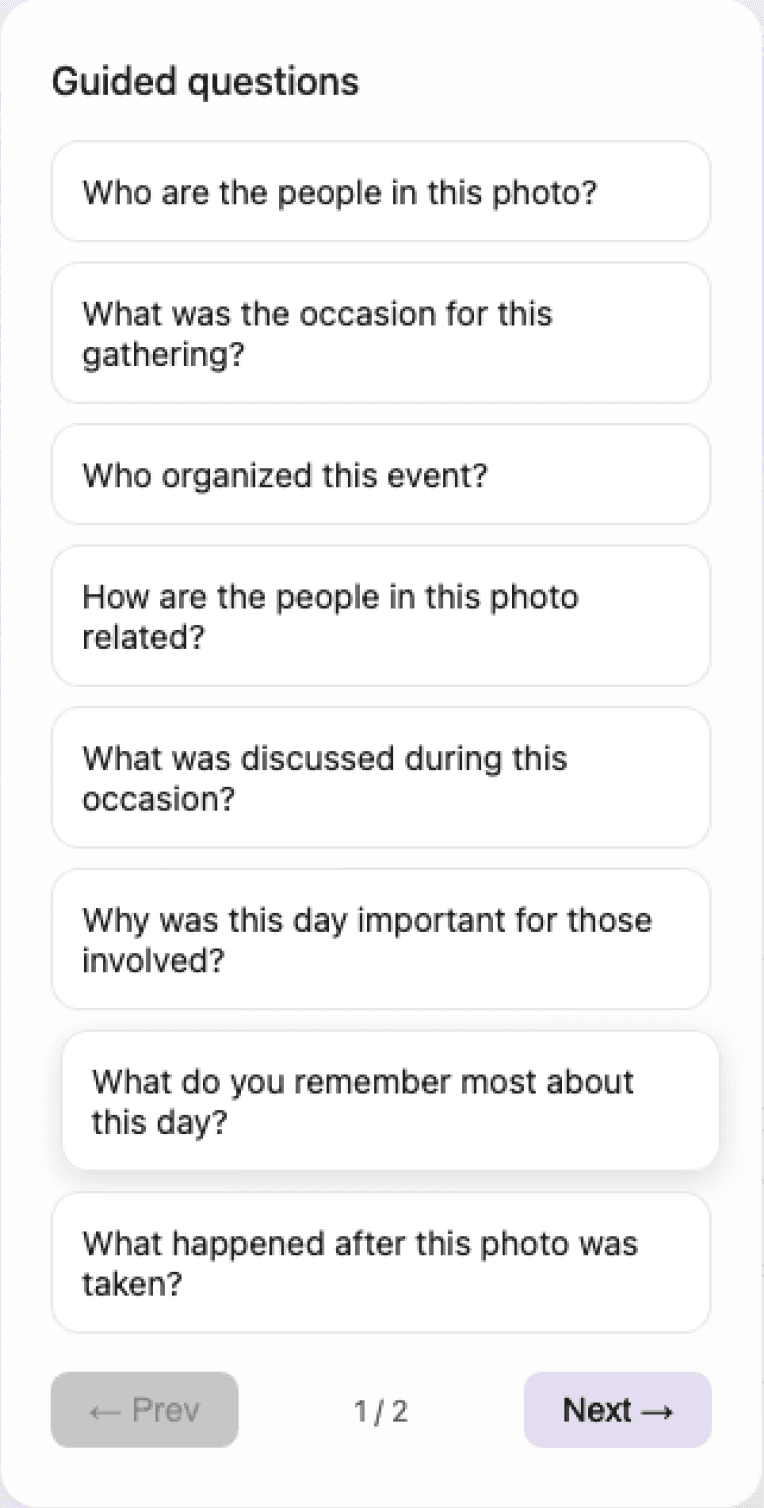
Memory Thread therefore generates and adapts questions based on prior responses, reducing the need for users to initiate or steer recall on their own.
Partial and semantic memory capture
Many recollections surfaced as incomplete, high-level narratives rather than fully specified events.
These inputs are stored as meaningful memory units and can later support further elaboration without requiring immediate completeness.
Relational memory organization
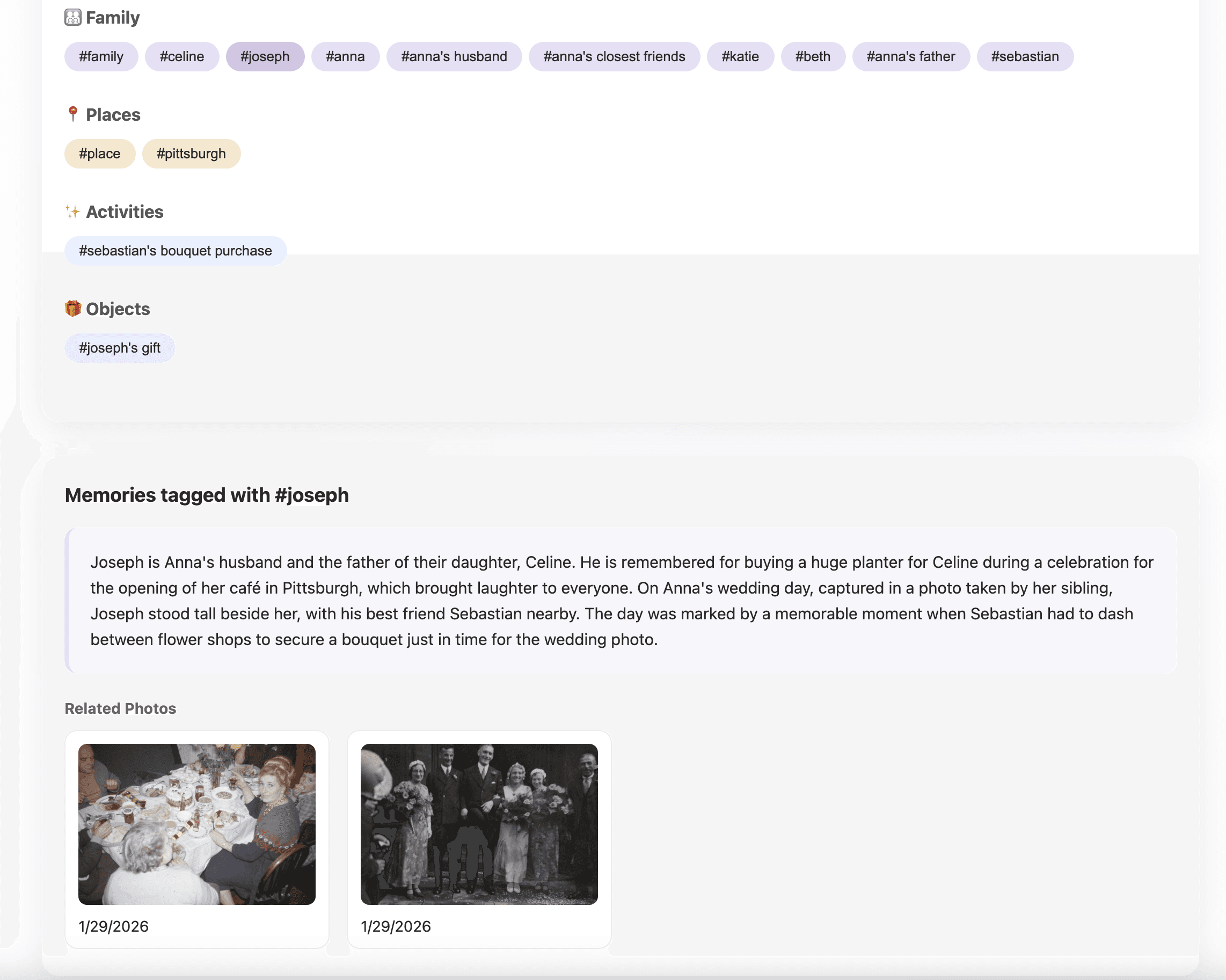
Memories commonly connected through people, places, and themes.
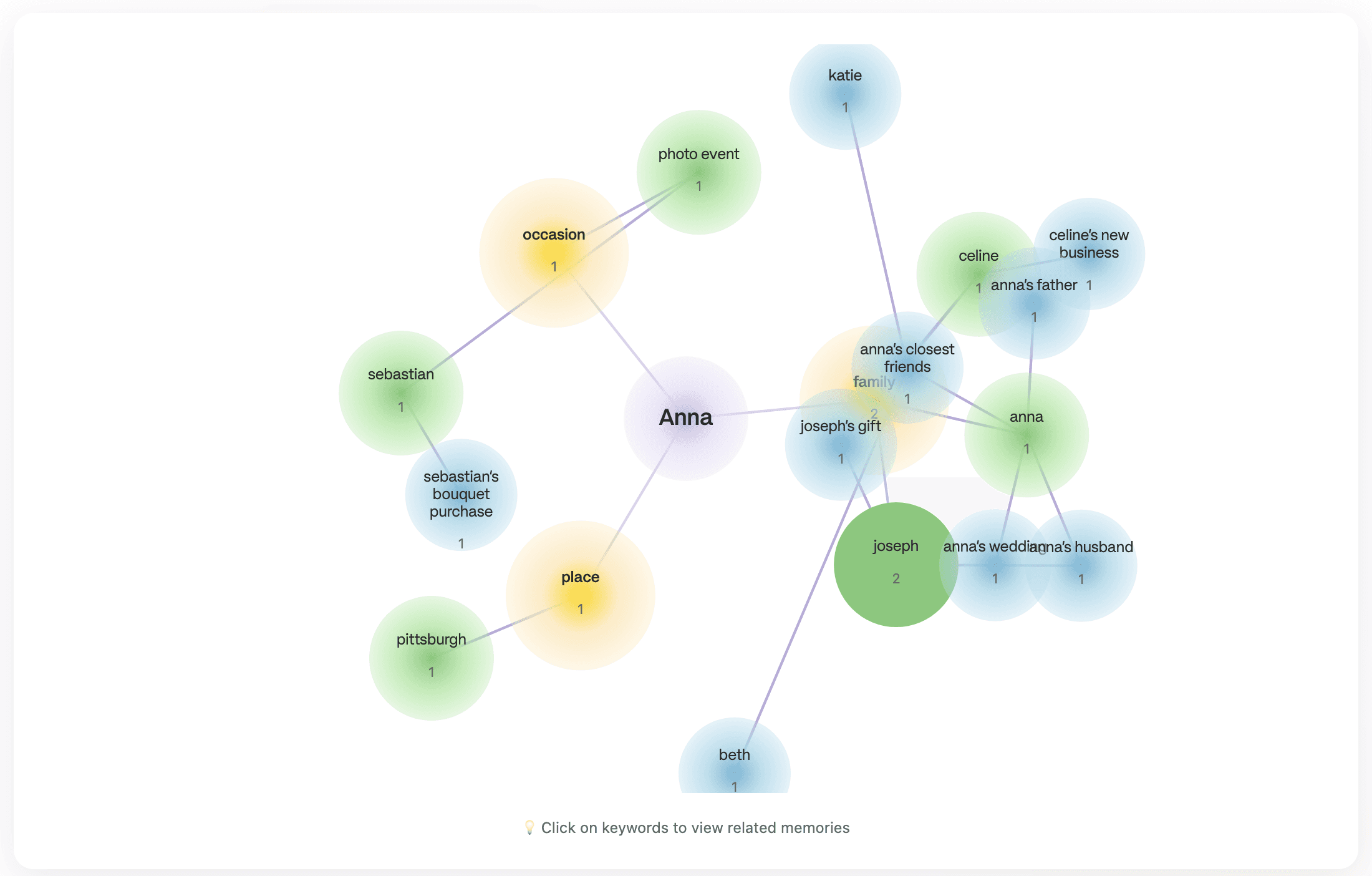
The system reflects this by linking memory units relationally, allowing patterns and meaning to emerge across entries.
System Overview
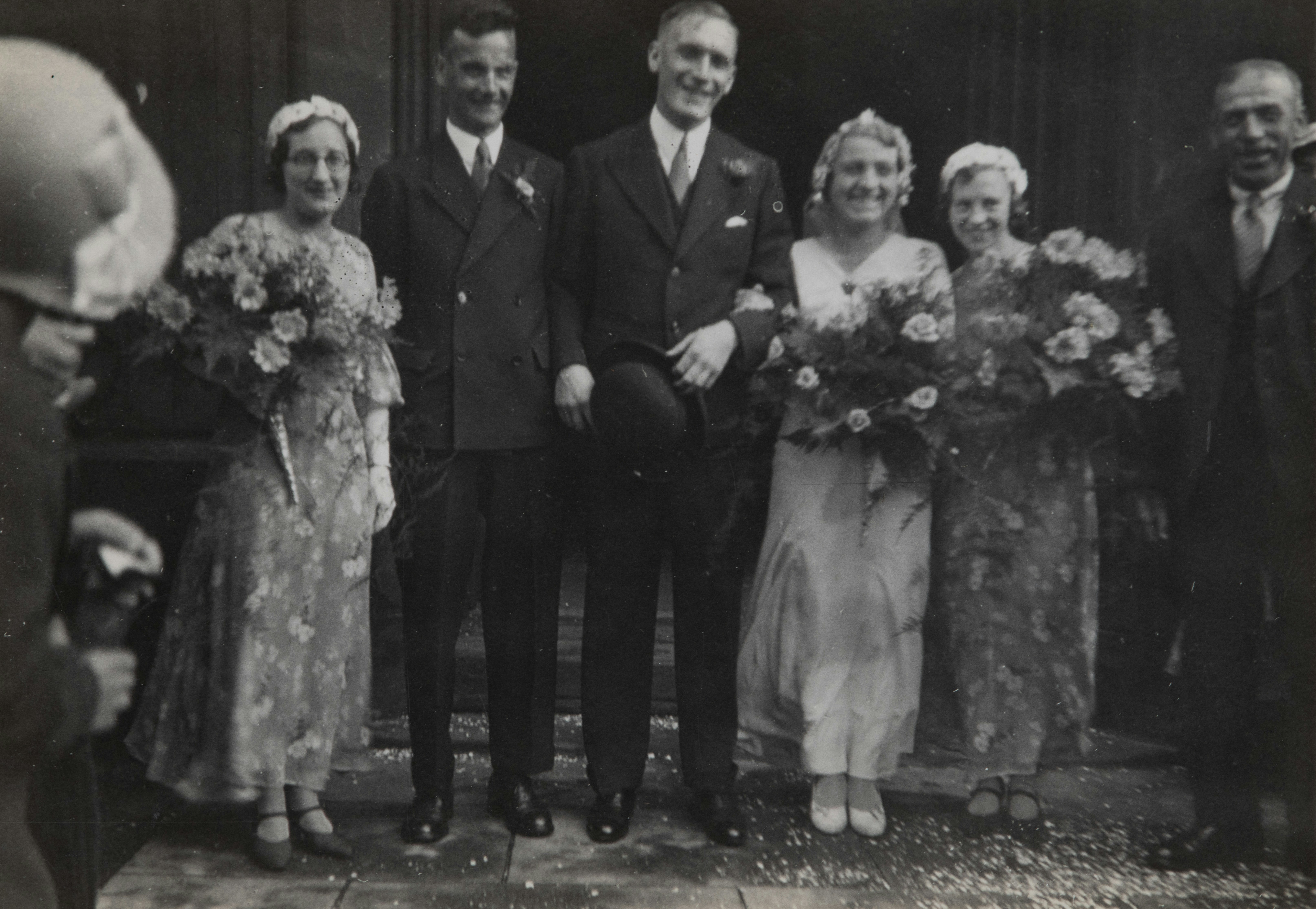
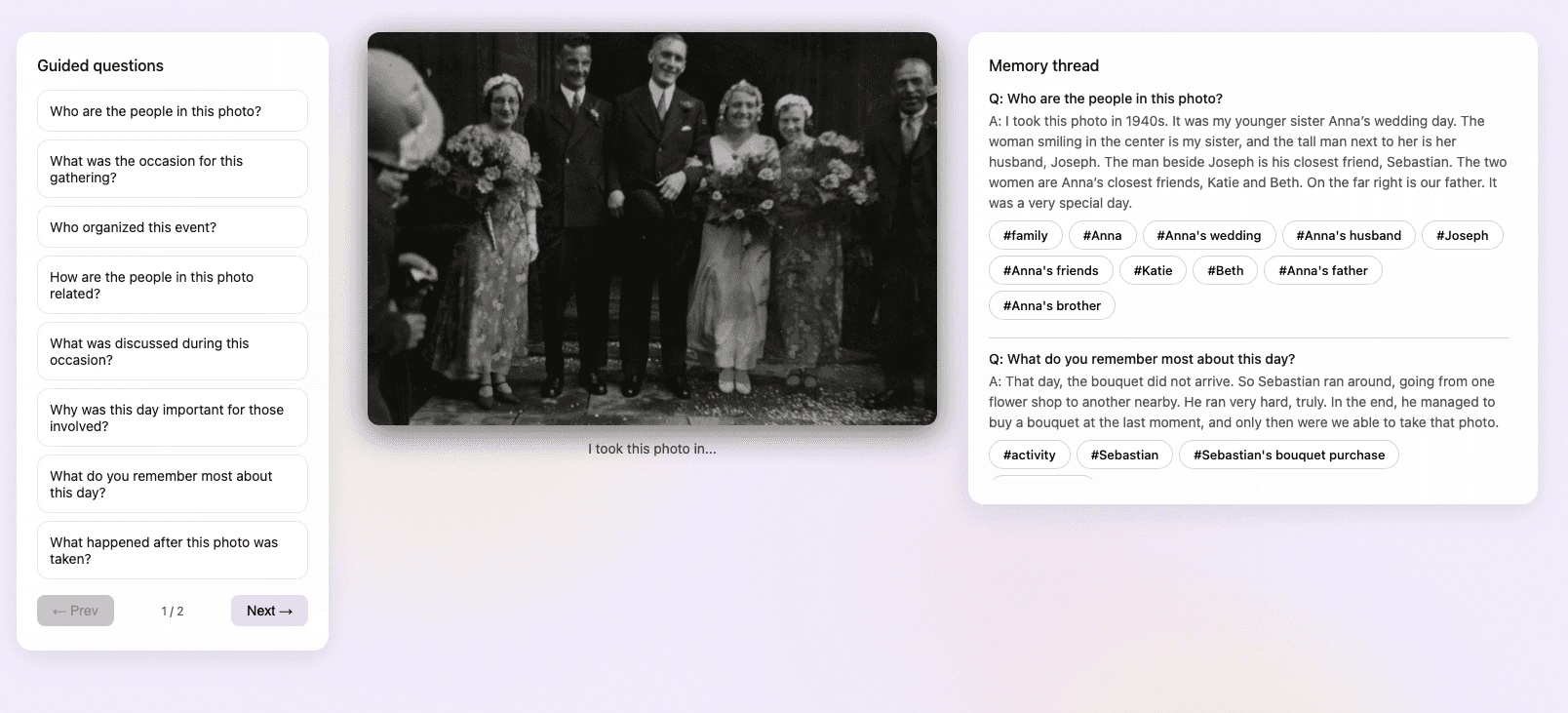
Memory Thread is an AI-assisted memory system that organizes personal memories through conversational recall rather than static storage. Each photo initiates a guided conversation, from which memory entities are extracted and linked across contexts.
Photo Input
AI-guided conversation
Structured memory output
Memory map
Memory Structure
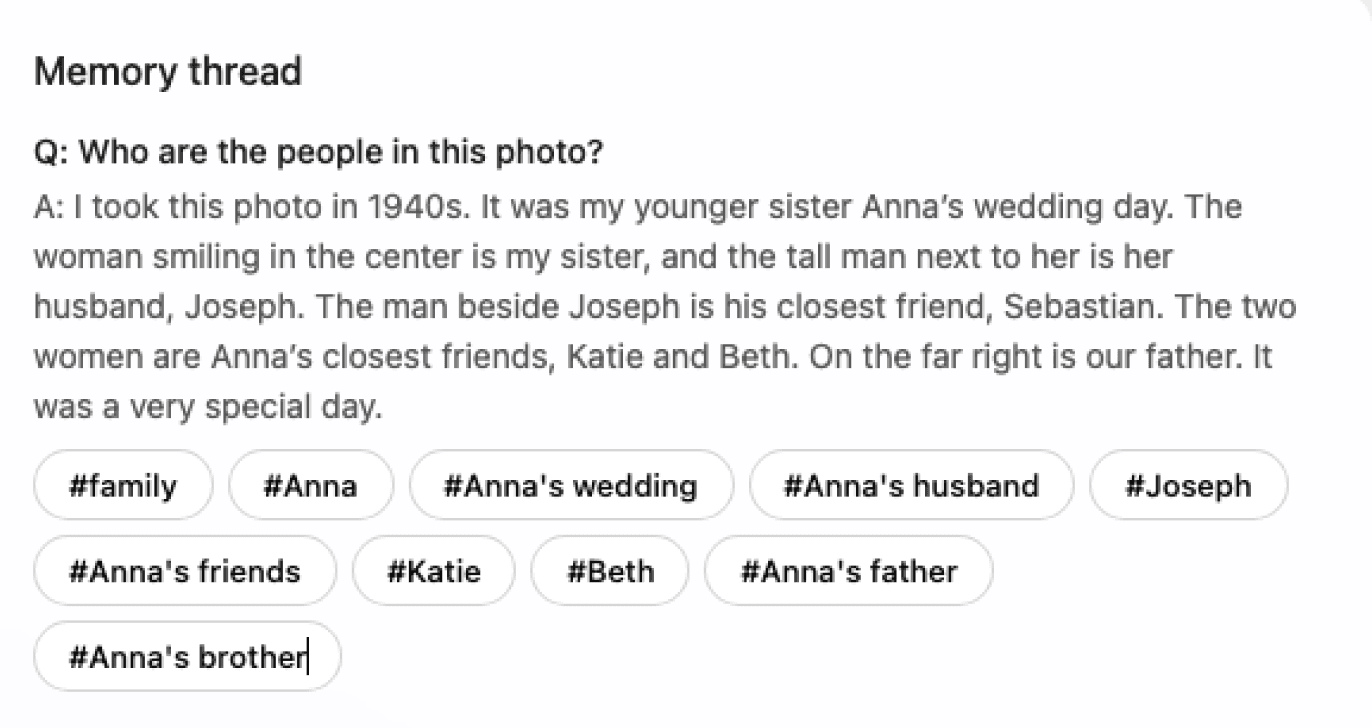
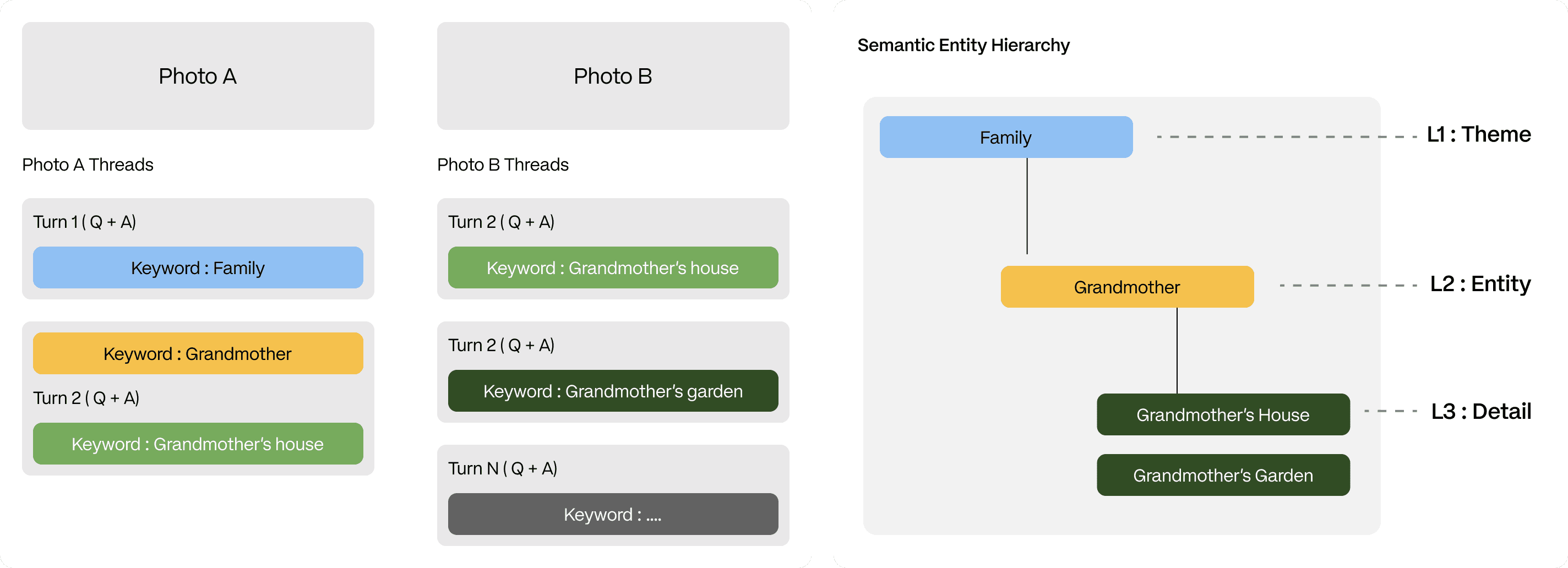
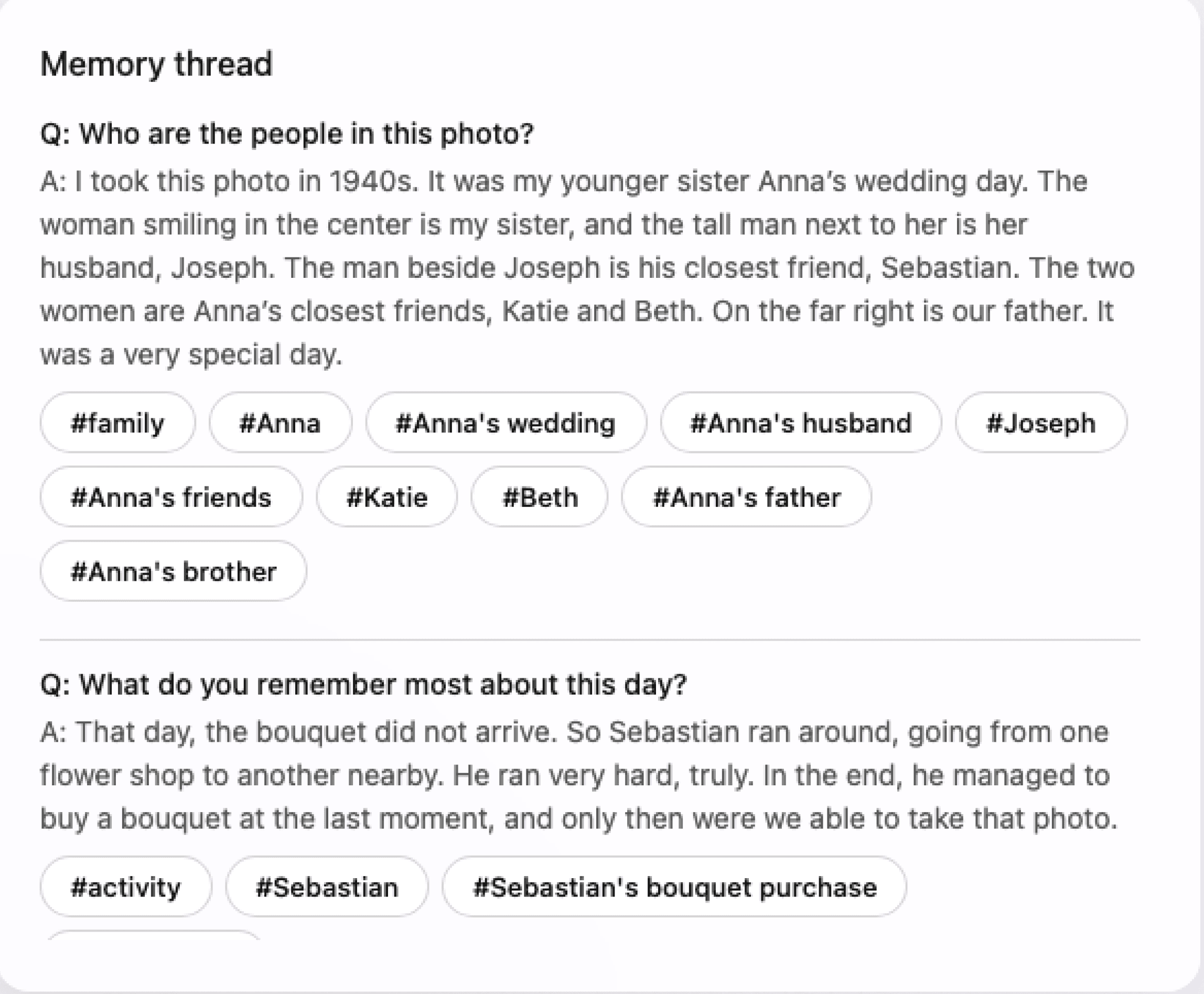
Each photo initiates a conversational thread composed of multiple question–answer turns.
Meaningful entities extracted from each turn connect memories across different contexts.
Final Design
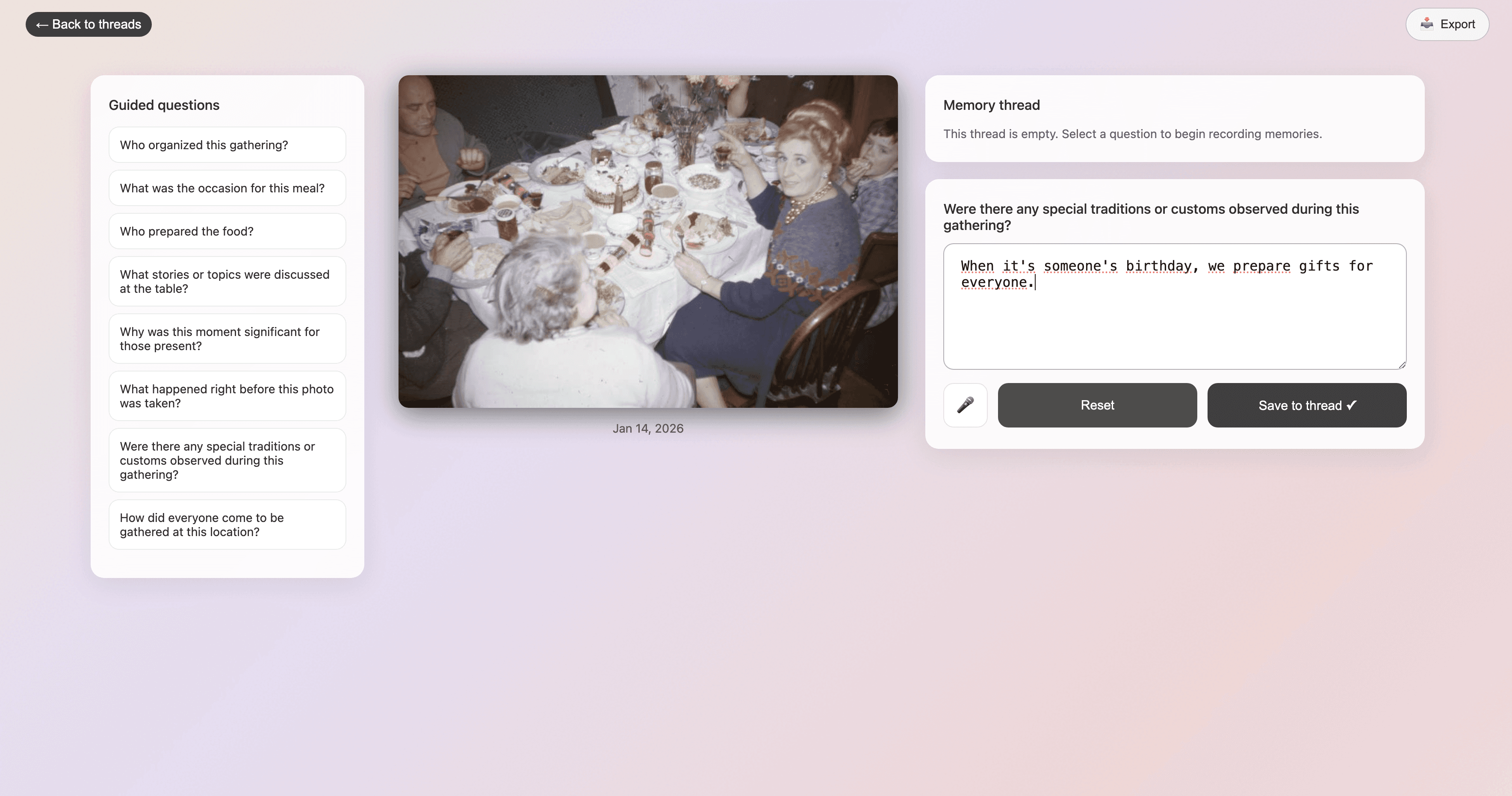
A photo initiates a guided conversation that helps users recall and articulate memories.
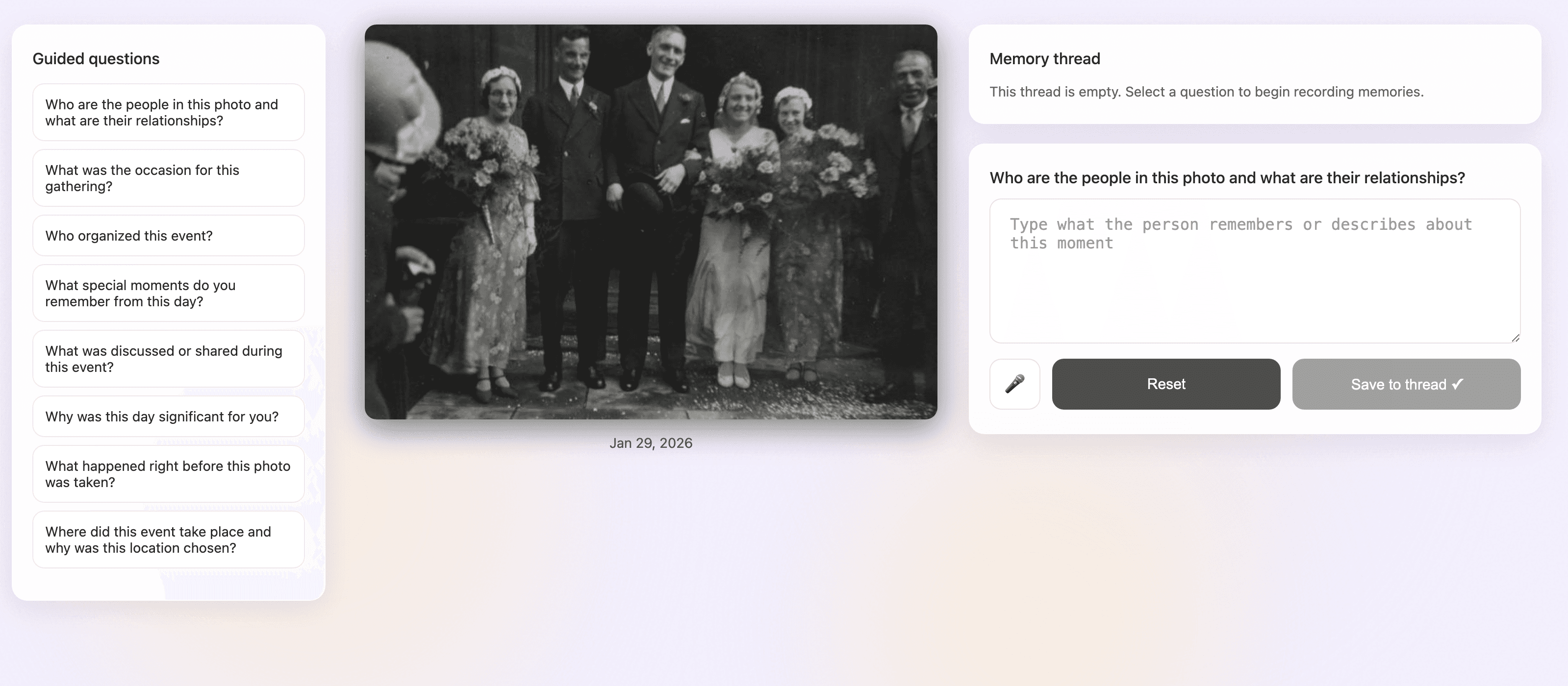
Each photo becomes a growing memory thread through accumulated questions and responses.
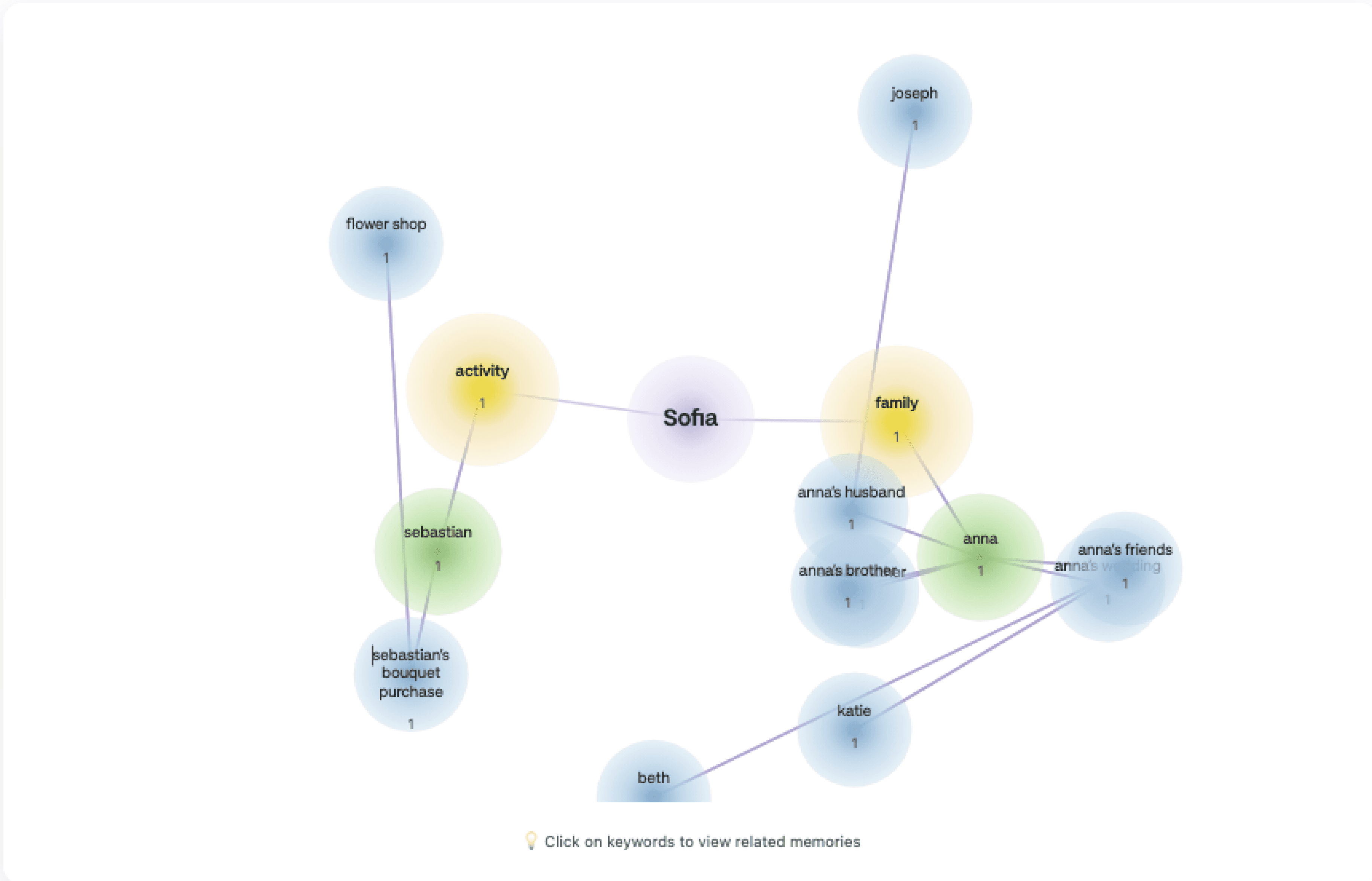
Memories are connected through shared entities
Visit the Webpage
©Jamie Chung 2025