Human Factors: In the Mood for Design
A video-based exploration of physical, cognitive, and emotional human factors in everyday interaction.
Video
Master of Arts
Personal
2025

Role
Sole Designer
Timeline
2025.10
Responsibilities
Storytelling
Tools
After Effect, Audition, Photoshop
Background
This project was created as an individual Midterm project for
MA Principles & Practices at Carnegie Mellon University in Fall 2025.
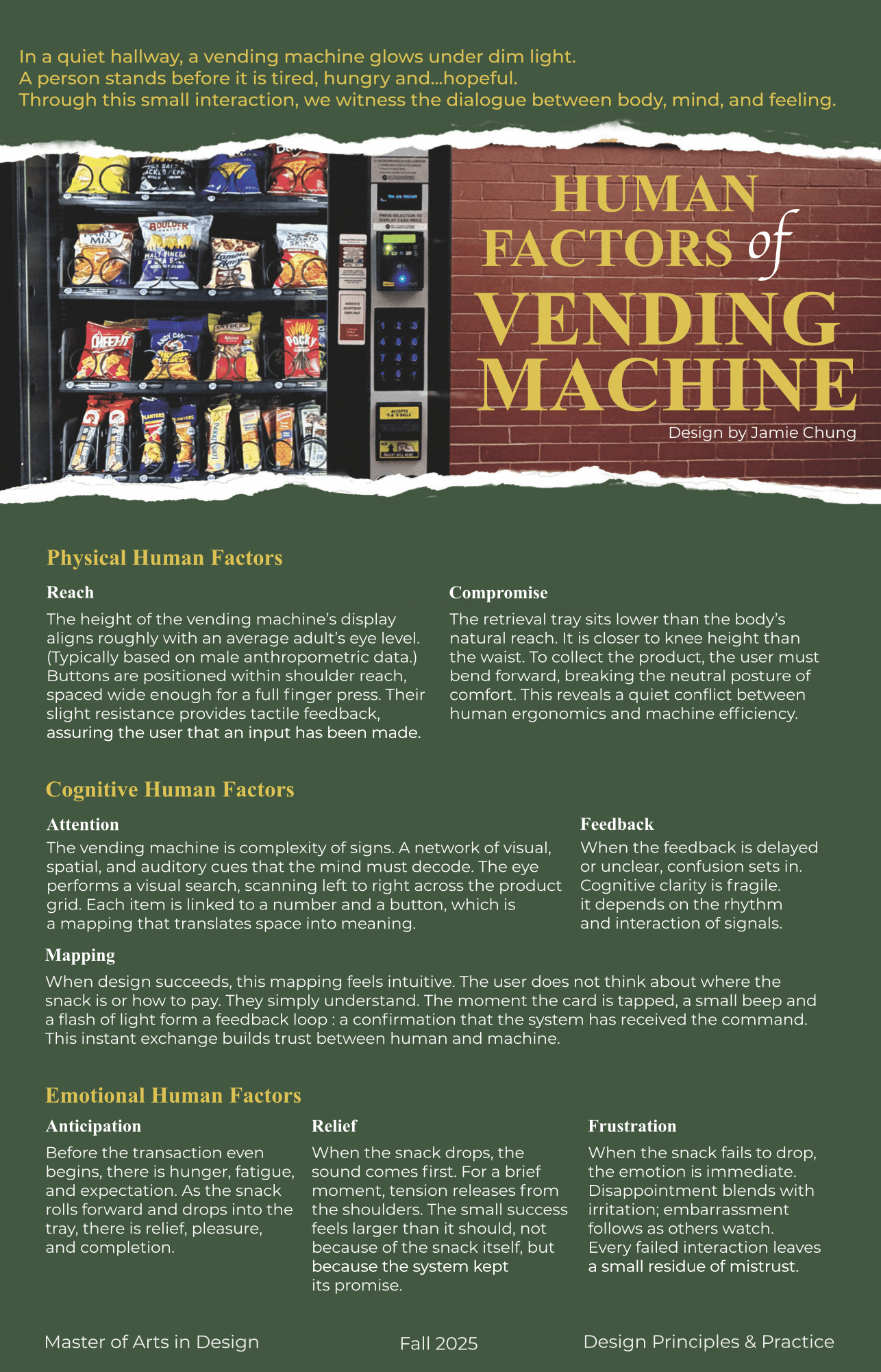
The assignment required the creation of a short video and a companion poster exploring physical, cognitive, and emotional human factors through a real-world example.
For this project, I produced a one-minute narrative video and a conceptual poster, using the everyday interaction with a vending machine as the central case study. The work was filmed on campus, late at night, to reflect the physical and
Development
The project was conducted to develop a holistic understanding of people in design, beyond usability or aesthetics alone.
Rather than treating physical, cognitive, and emotional factors as isolated checklists, the goal was to explore how these factors coexist and accumulate in a single moment of interaction.
By focusing on an ordinary vending machine, the project aimed to reveal how design becomes meaningful not through novelty, but through its alignment (or misalignment) with human bodies, mental models, and emotional states.
I developed the poster first to articulate the detailed human factors analysis, then translated that content into a short video through storytelling rather than explanation. Treating the video as a film teaser, I focused on mood and atmosphere, drawing visual inspiration from Chungking Express by Wong Kar-wai to maintain a consistent tone across both mediums.
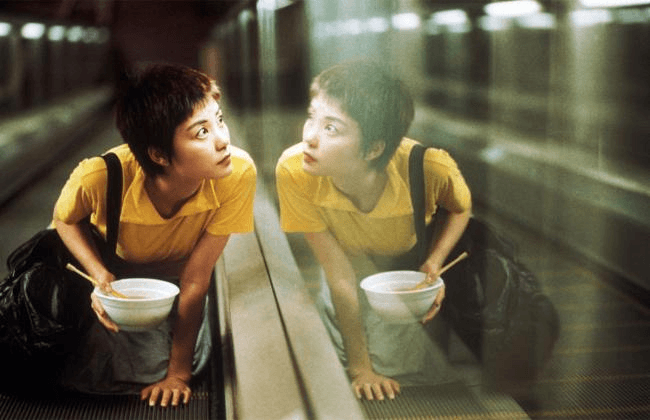

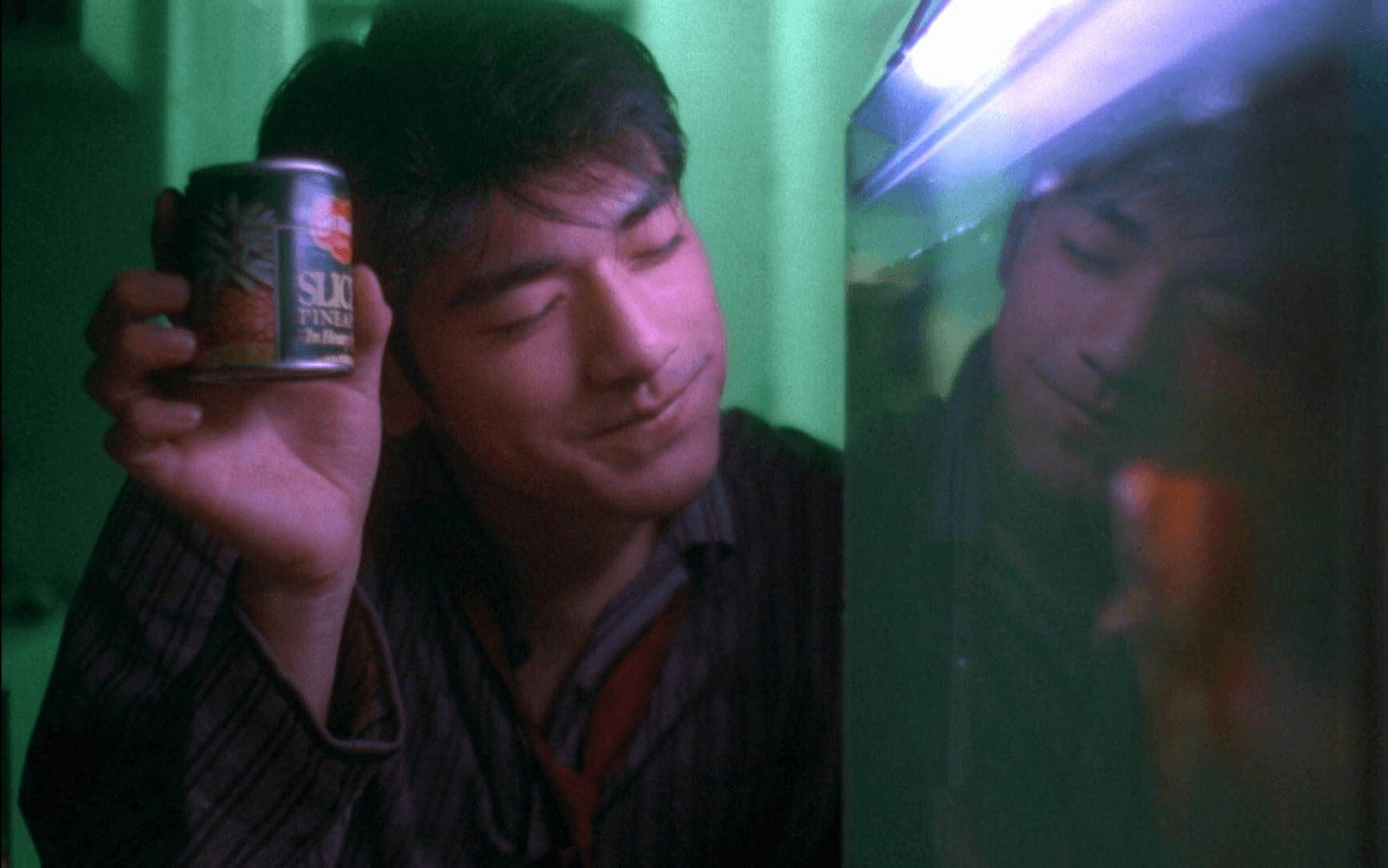
Chungking Express (Wong Kar-wai, 1994)
Final Design
Through this project, I gained a deeper understanding that design is not only a set of features,
but a condition shaped by human readiness such as physical fatigue, cognitive expectation, and emotional tension.
The process highlighted how small design decisions, such as button placement, feedback timing, or retrieval height, can significantly influence trust, frustration, and satisfaction.
I also learned how narrative and cinematic framing can be used as analytical tools, helping surface human factors that might be overlooked in purely functional evaluations.
Reflection
If I were to revisit this project, I would expand the analysis to include a wider range of bodies and contexts, such as users of different heights, wheelchair users, or individuals carrying items.
The project revealed that many physical design decisions are based on standardized anthropometric data, often centered on an average adult body. A future iteration could more explicitly examine who is excluded by these standards, and how emotional responses differ when physical access becomes strained.
I would not change the narrative approach, however. The combination of video, script, and reflective poster proved effective in capturing the intimacy of human–design interaction, which aligned strongly with the project’s intent.
©Jamie Chung 2025