Definition of Design
Design as a joint that enables connection and expansion
Physical Computing
Master of Arts
Interaction Design
Personal
2025

Role
Sole Product Designer /
UX Consulting ( Project-based)
Timeline
2025.11 - 2025.12
(2 Weeks)
Responsibilities
Concept Framing, Prototyping,
Generative visual design
Tools
Arduino, p5.js
Background
This project was created as the final assignment for MA Design Principles & Practices at Carnegie Mellon University in Fall 2025.
The assignment asked students to articulate their answer to the questions:
What is design? What does it mean to be a designer? What does it mean to engage in design?
I explored these questions through a physical computing experiment combining conceptual framing, Arduino-based sensing, and p5.js visualization.
Development
Starting point
I approached design not as an isolated outcome, but
as a fundamental structure and a joint that enables connection.
The physical structure makes connection tangible, while the screen-based interaction
visualizes the invisible consequences that emerge from those connections.
Together, they frame design as a living system. One that gains meaning,
complexity, and influence as it intersects with other elements.
The hexagon allows continuous, multi-directional expansion.
Each hexagon can stand alone, but its meaning changes
as soon as another connects to it.
In this project, each hexagon can represent
a person, a method, a discipline, or a context.
Design exists in the relationship between them.
Formboard Hexagon ground & modules
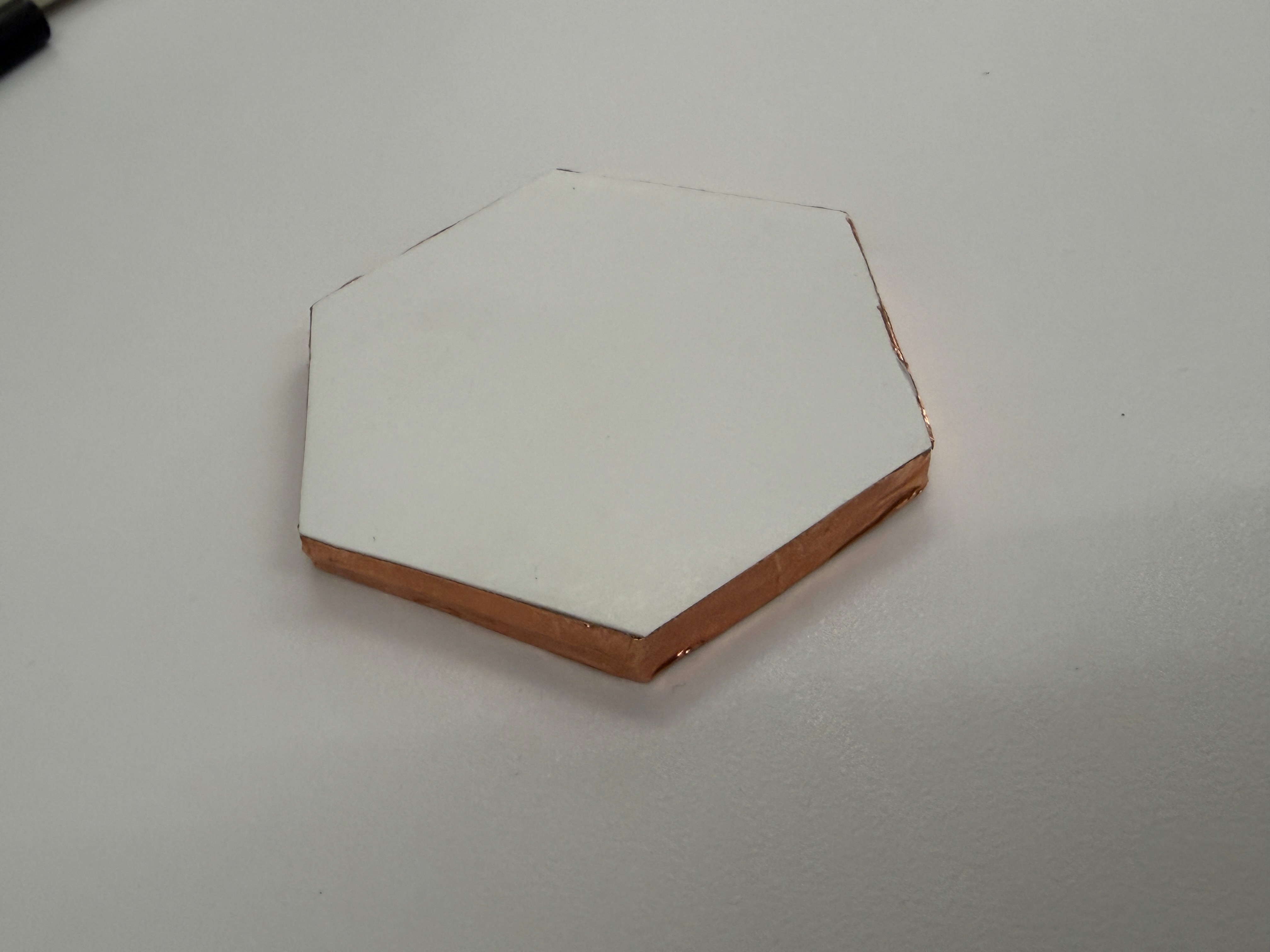
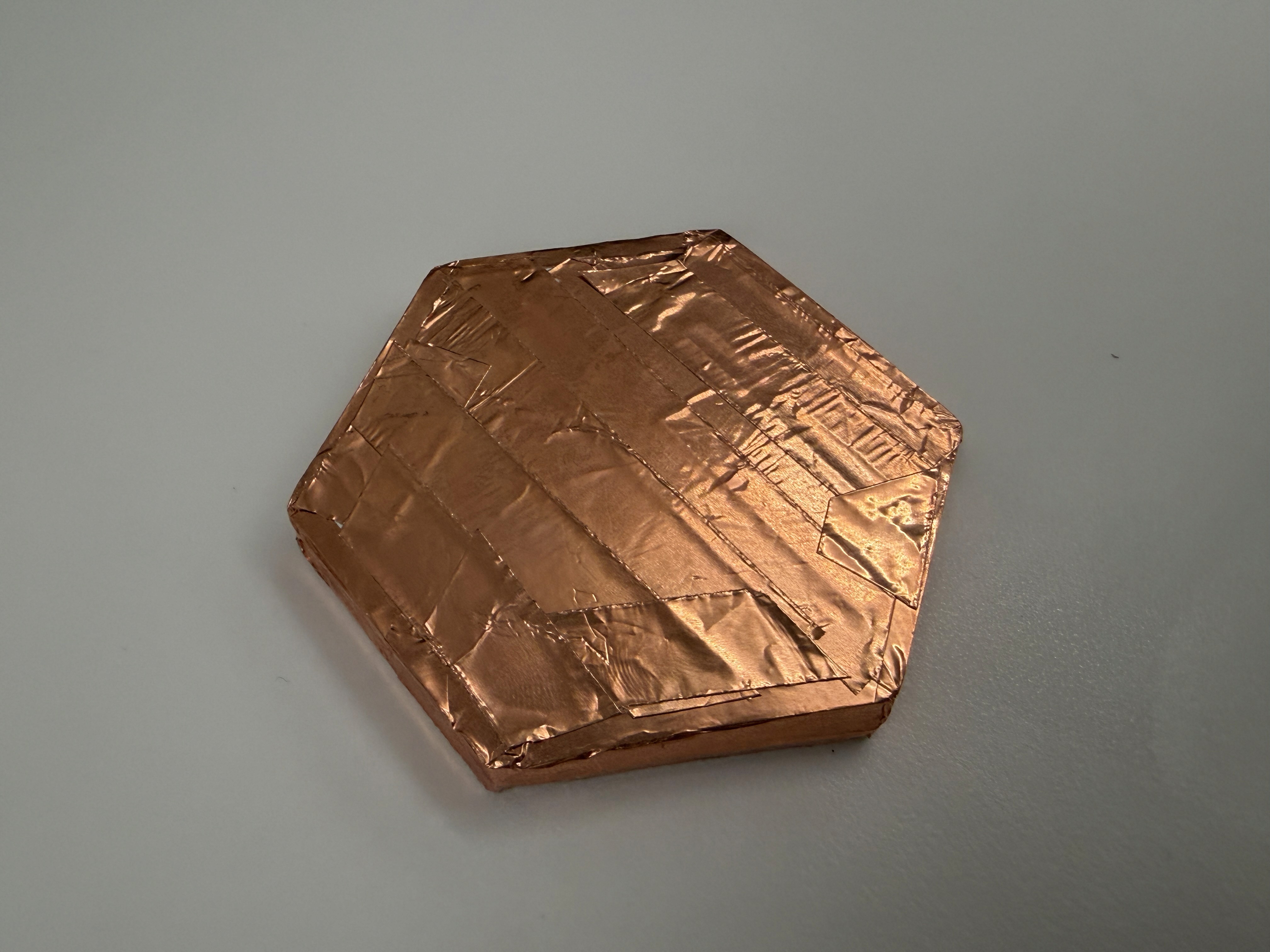
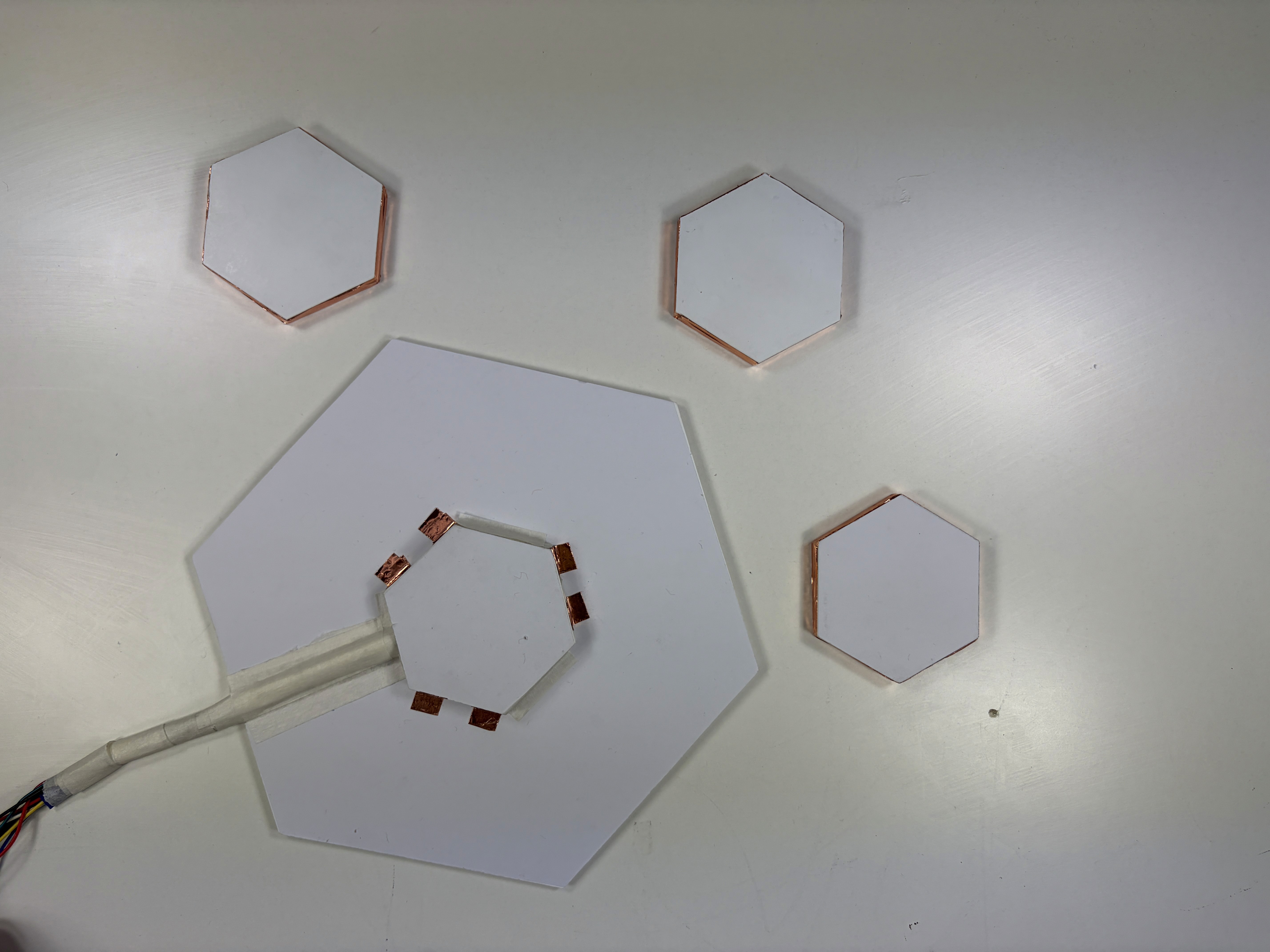
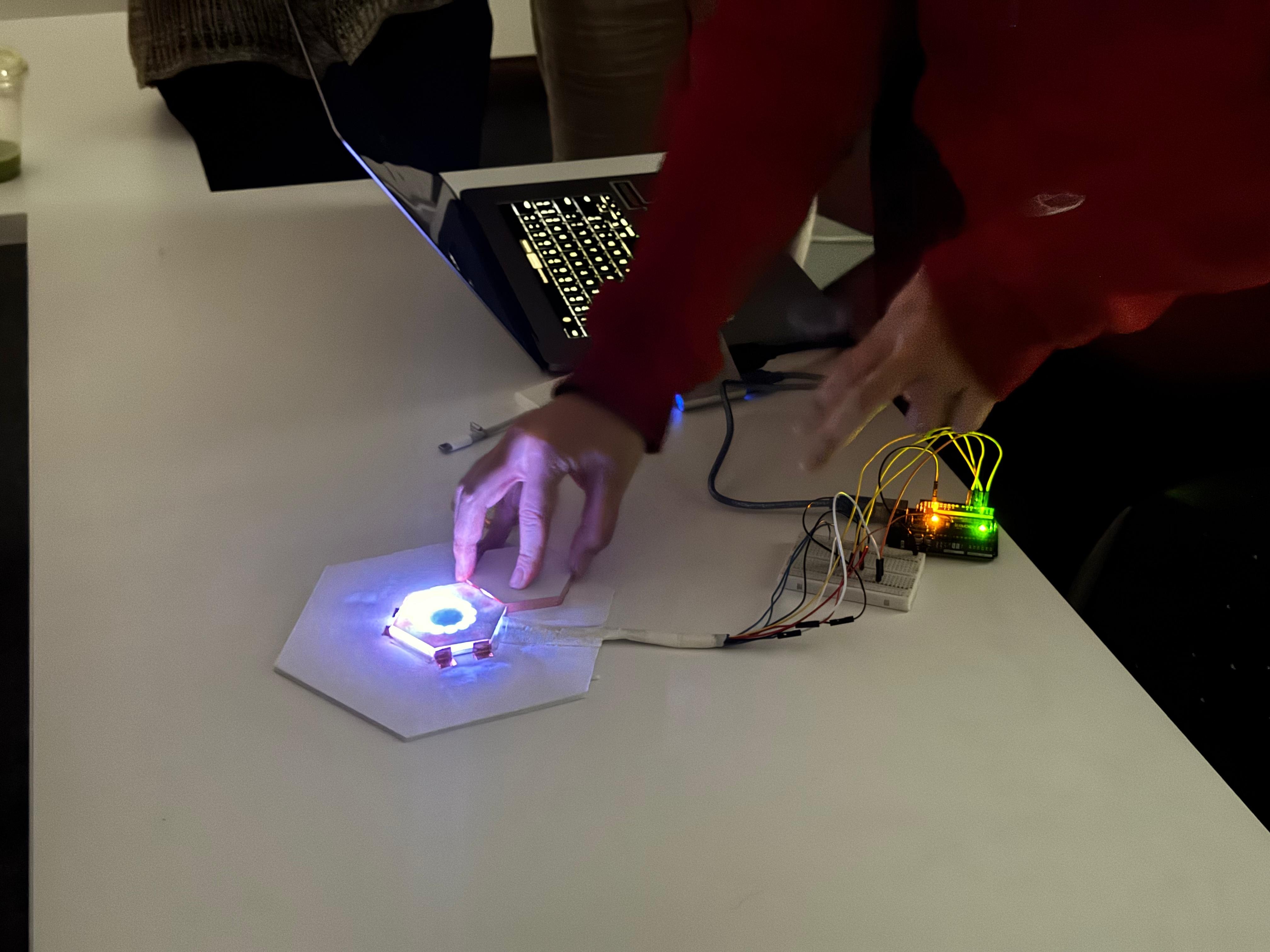
The physical system visualizes design as a joint. Hexagonal modules detect contact through copper wiring, and each new
connection alters the color of the central light. Signaling how design responds and evolves as new elements enter the system.
p5.js graphic Iteration
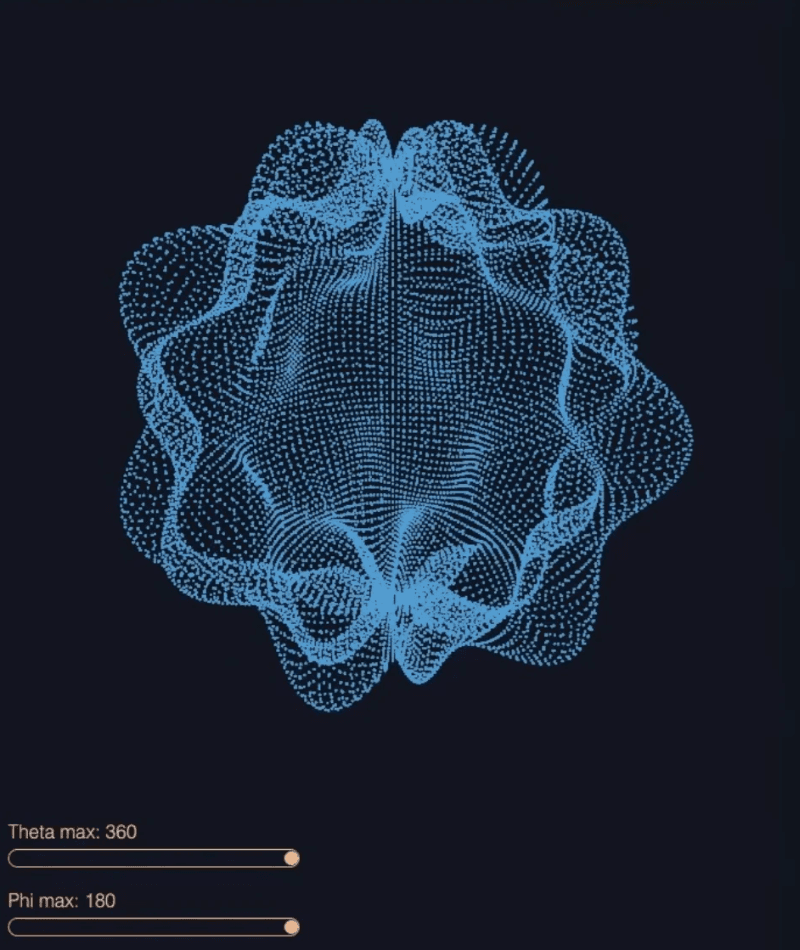
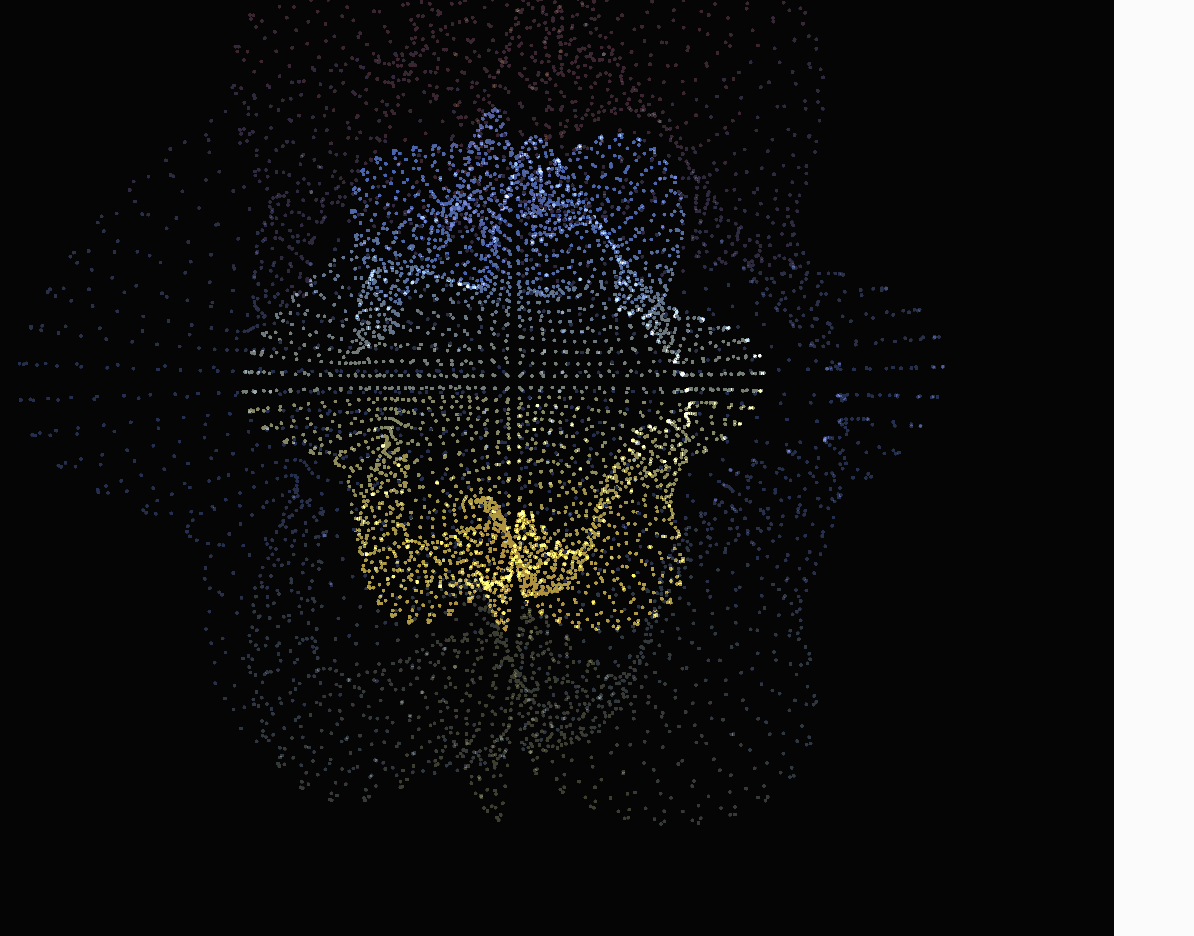
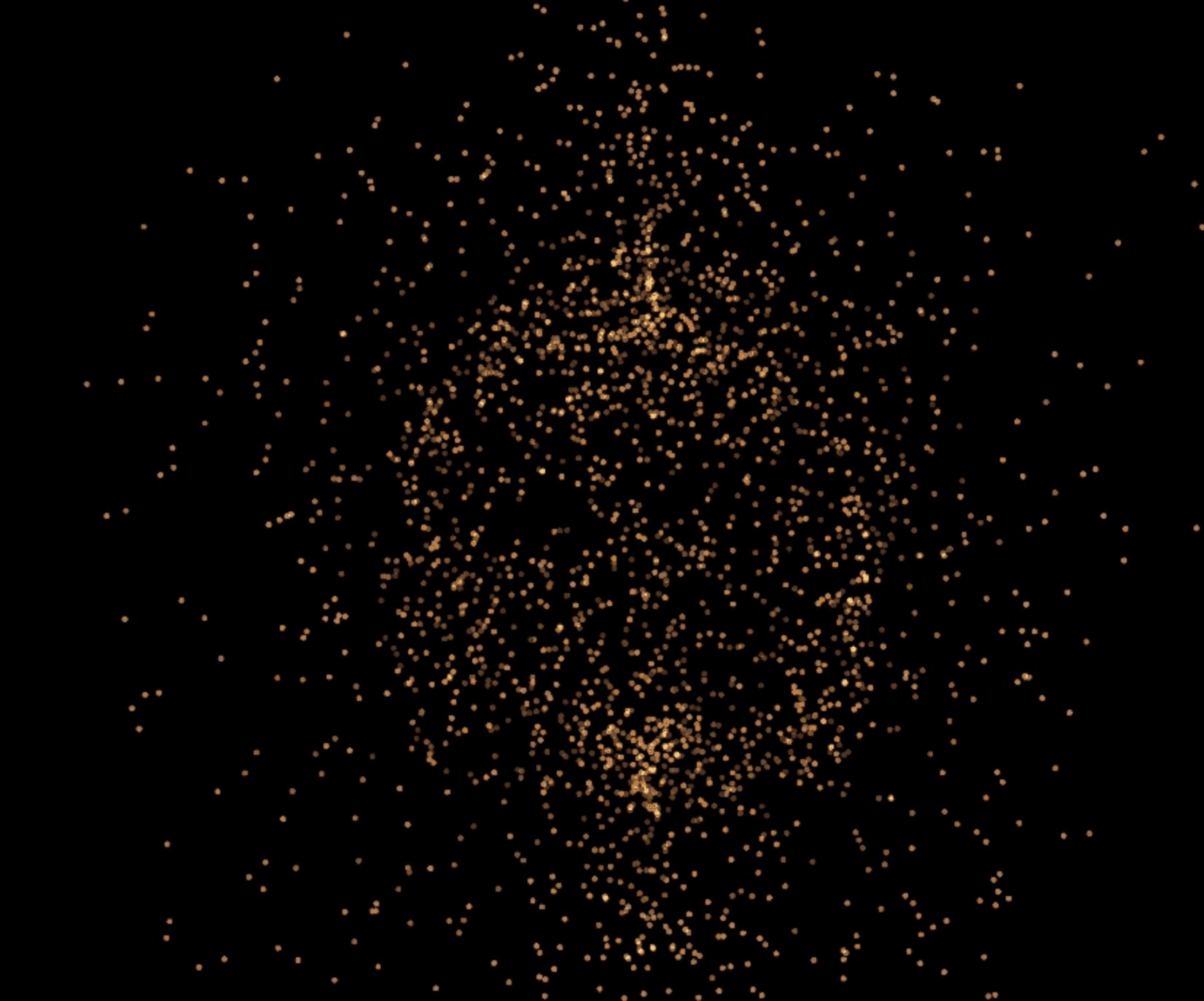
To explore how colors overlap and interact as hexagonal modules connect, I experimented with multiple graphic styles in p5.js. Each iteration tested a different way of visualizing connection. through density, rhythm, and spatial behavior.
As more hexagons join the system, its behavior gradually transforms: colors begin to blend, rhythms shift, and wave patterns grow more complex. These visual changes reflect how design expands when it engages with new people, perspectives, or domains. Becoming richer not by replacement, but by accumulation and interaction.
Final Design


Each of hexagons has different color and graphic styles.

As more hexagons connect, the system’s behavior changes: colors blend, rhythms shift, and waves become more complex.
This interaction mirrors how design expands when it engages with new people, perspectives, or domains.
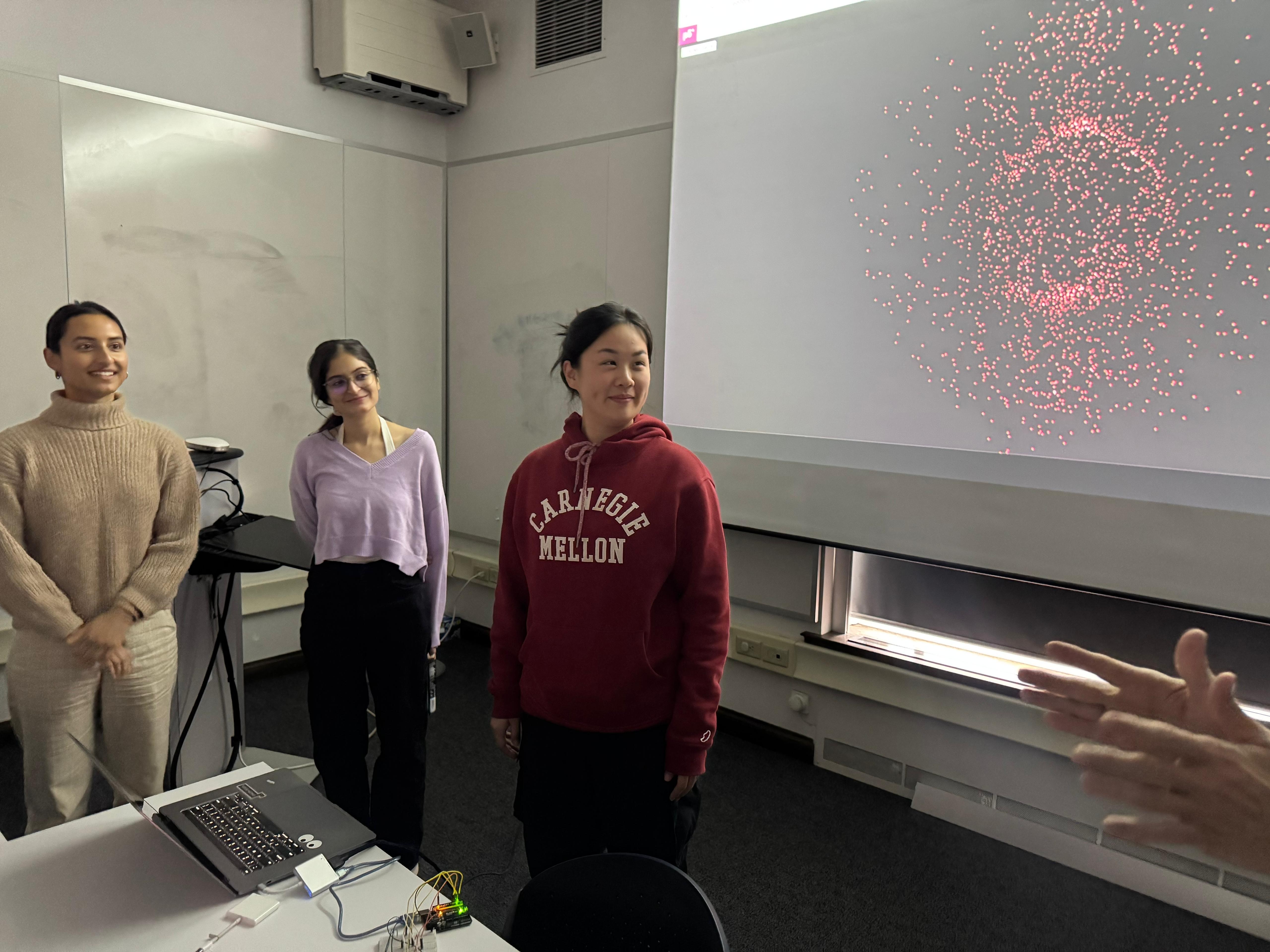
Presentation Day
Reflection
While the foam board prototype effectively conveyed the concept, a further iteration using 3D printing could have elevated the physical detail and structural clarity. This reflection reinforced the value of material iteration beyond initial satisfaction.
©Jamie Chung 2025